Forensic Debunk: The Israeli Strike & The "Earthquake Bomb" Myth
Forensic blast seismology, Trua accelerometer network mechanics, and munitions physics debunking the M3.4 southern Lebanon "earthquake bomb" and tactical nuclear myths.
Analysis of state competition, alliance dynamics, regional power balances, and the strategic calculations shaping today's international order.
Forensic blast seismology, Trua accelerometer network mechanics, and munitions physics debunking the M3.4 southern Lebanon "earthquake bomb" and tactical nuclear myths.
Examining AUKUS, the Quad, South China Sea disputes, and the contest for maritime supremacy from the Strait of Malacca to the Pacific.
In-depth assessments of active and latent conflicts — from Eastern Europe to the Middle East, Africa, and South Asia.
Scenario analysis, trend extrapolation, and early-warning frameworks to anticipate the next phase of global instability.
Why a single BRICS currency fails Robert Mundell's Optimum Currency Area criteria: radically divergent oil cycles, closed capital accounts, and absent fiscal federalism.
Why the single-currency myth was discarded in New Delhi for bilateral digital rails, Project mBridge, and non-Western commodity benchmarking.
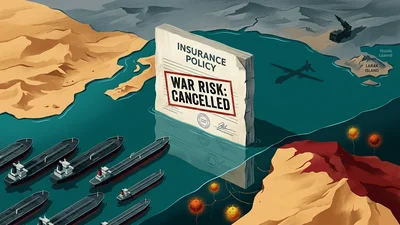
Strategic intelligence analysis of the Strait of Hormuz crisis: how naval mines, drone strikes, and commercial war-risk insurance repricing achieve de facto maritime closure.
Strategic analysis of Great Nicobar Island: how India's $9B tri-service military mega-base at the Six Degree Channel exploits China's critical energy chokepoint in the Malacca Strait.
How budget transit shortcuts, GPS spoofing corridors, and customs data extraction turn commercial travel into acute operational vulnerabilities.
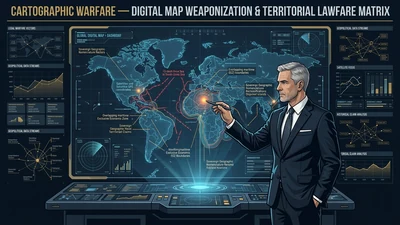
Strategic analysis of Cartographic Warfare: how revisionist states weaponize digital maps, geographic nomenclature, 10-dash lines, and sovereign data systems.
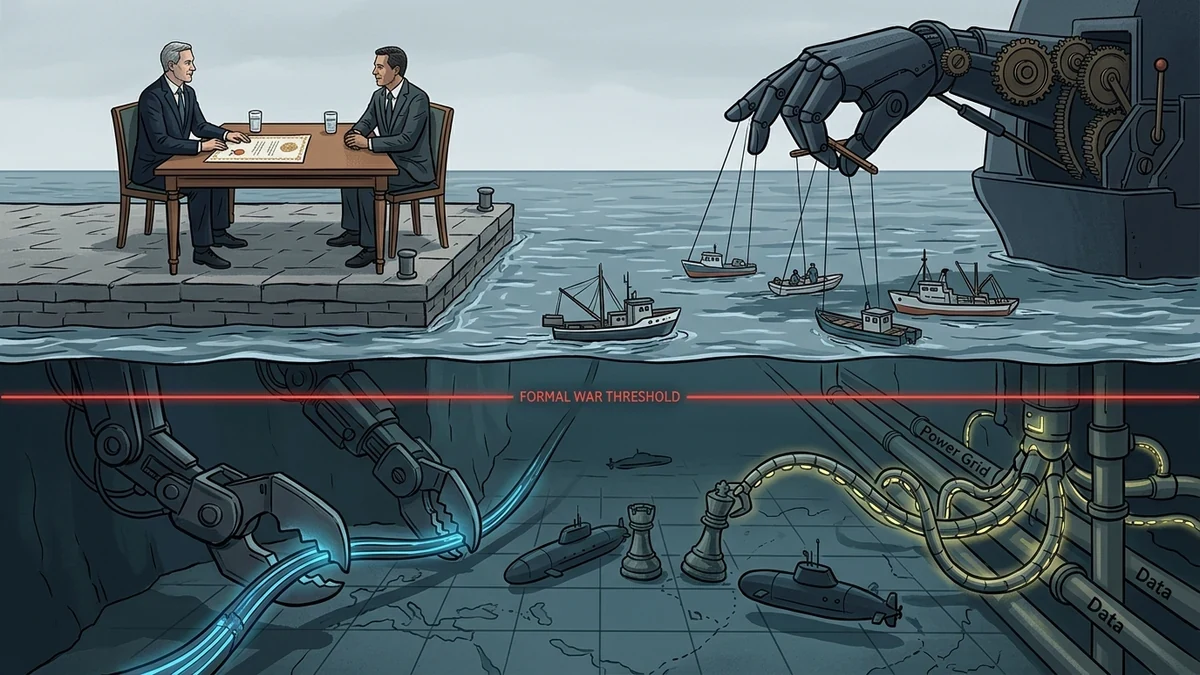
Comprehensive intelligence guide to Grey Zone Warfare: how revisionist states use sub-threshold cyber operations, economic lawfare, maritime militias, and cognitive sabotage to win without triggering conventional war.
Our strategic assessments prioritize structural realism, evaluating state behavior through material power distribution, military capabilities, security dilemmas, and deterrence thresholds rather than ideological rhetoric.
Key indicators include naval air defense deployments, maritime grey-zone militia concentrations, semiconductor supply chain security measures, and alliance force posture adjustments across the First Island Chain.
Assessments undergo rigorous multi-source verification incorporating satellite geospatial telemetry, commercial shipping radar feeds, and peer-reviewed academic literature without state funding or geopolitical bias.