Forensic Debunk: The Israeli Strike & The "Earthquake Bomb" Myth
Forensic blast seismology, Trua accelerometer network mechanics, and munitions physics debunking the M3.4 southern Lebanon "earthquake bomb" and tactical nuclear myths.
In-depth assessments of active and latent conflicts — from Eastern Europe to the Middle East, Africa, and South Asia.
Forensic blast seismology, Trua accelerometer network mechanics, and munitions physics debunking the M3.4 southern Lebanon "earthquake bomb" and tactical nuclear myths.
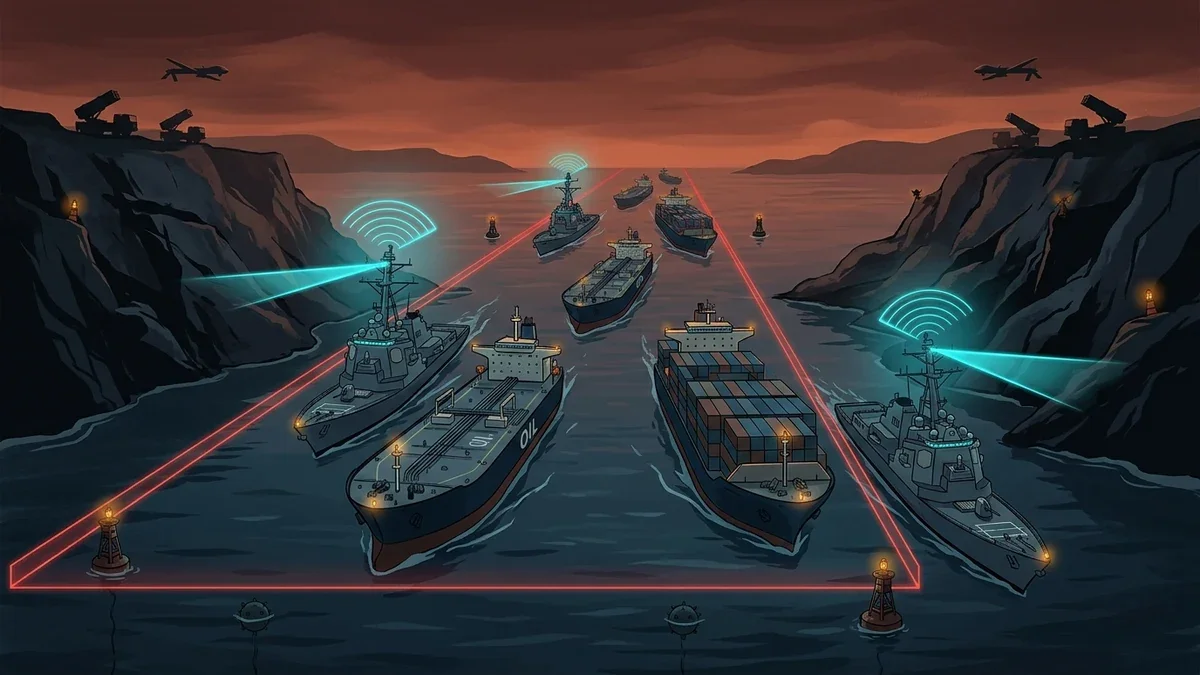
How multinational naval escorts in the Strait of Hormuz transform freedom of navigation from a commercial market mechanism into a permanent combat campaign.
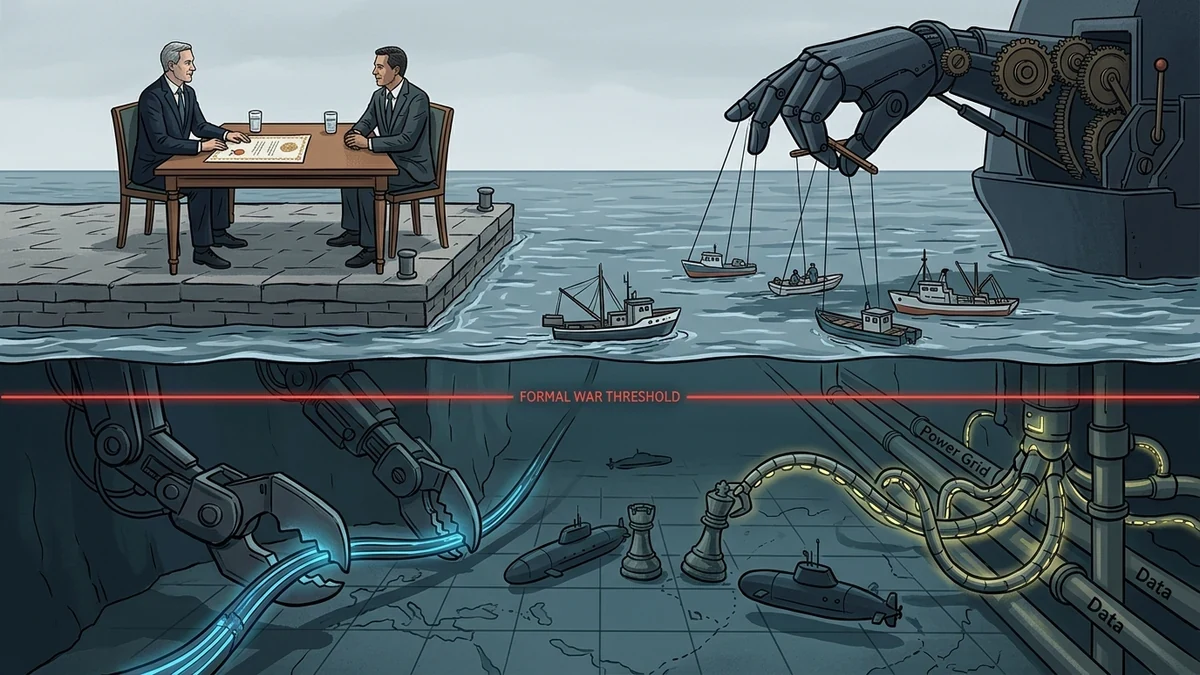
Comprehensive intelligence guide to Grey Zone Warfare: how revisionist states use sub-threshold cyber operations, economic lawfare, maritime militias, and cognitive sabotage to win without triggering conventional war.
London and Kyiv in deal to help stop protesters and hostile states targeting military bases and critical infrastructure AI models trained on Ukrainian battlefield data will be used to stop p...
Republic of China Military Police sections equipped with anti-tank launchers assemble Aug. 8, 2026. USNI News photo TAIPEI, TAIWAN – Torrential rainfall soaked two platoons’ worth of Republi...
Russian mechanized and aerospace forces execute a multi-axis hypersonic and ballistic missile wave against Kyiv electrical substations and air defense radars, testing Western attrition tolerances.
This article is part of a series on US-Gulf security cooperation. Read more here . Global conflict is expanding faster than the United States’ capacity to manufacture weapons. But even if US...
United Kingdom defense leadership has formally rejected Kremlin warnings of 'unprecedented consequences' regarding Western intelligence sharing and long-range cruise missile support for Ukra...
The battle for Pokrovsk represents a critical operational pivot in the Donbas theater. Russian mechanized echelons have advanced within 11km of the city’s central rail junction, utilizing in...
In strategic bargaining theory, diplomatic conferences rarely reflect abstract legal principles; they formalize the balance of coercive power established on the ground in the hours prior to ...
In classical naval theory, the control of maritime chokepoints represents the supreme lever of coercive statecraft. When the 60-day bilateral de-escalation window—colloquially established as...
In one court in Kent, most cases relate to term-time holidays, but non-attendance is a complex issue and post-pandemic rates remain high As the long school summer break approached its mid-po...
Did the US really destroy Iran’s ballistic missile capability? The US claims it destroyed Iran’s ballistic missile capability, but a former White House adviser in the Carter administration c...
The Islamic Republic of Iran is the primary state actor, motivated by the core national interest of regime survival and regional deterrence. Secondary state actors include the United States ...
The financial maneuvers of the Gulf Cooperation Council (GCC) states reflect a strategic utilization of global capital markets to sustain national power during regional security crises. The ...
The emergence of a trilateral mutual defense alignment between Pakistan, Saudi Arabia, and Türkiye marks a significant restructuring of the Middle Eastern security architecture. Facing aggre...
The primary state actors are the major Latin American republics, including Brazil, Venezuela, Argentina, and Colombia, whose foreign policy postures shift between regional integration and al...
In the anarchic international system of Homeric Greece, individual city-states and their ruling warlords function as the primary sovereign actors. These leaders are driven by the core intere...
In the anarchic international system, the acquisition of nuclear capabilities represents the ultimate tool for state survival and deterrence. The strategic context of latent nuclear deterren...
The shift in defense procurement within the United States highlights a critical realignment of the state security apparatus and domestic industrial capacity. The primary state actor, the fed...
The internal political landscape of Israel is undergoing a critical transformation as military sacrifice is increasingly converted into political influence, altering traditional civil-milita...
The trilateral negotiation involving the United States, Saudi Arabia, and Israel represents a classic realist alignment of state interests aimed at balancing the regional influence of the Is...
The security architecture of the Taiwan Strait is increasingly defined by the asymmetric capabilities of the Republic of China (Taiwan) and the People’s Republic of China (PRC). Taiwan’s cor...
The primary state actors in this conflict are the Russian Federation and Ukraine, both engaged in a high-intensity conventional war of attrition that threatens regional security. Secondary s...
The primary state actors are the Republic of Sudan and the Republic of Chad, both struggling for sovereign survival, territorial integrity, and regime security in a highly volatile region. S...
The transition away from the post-Cold War security architecture forces the European Union and the Republic of Türkiye to re-evaluate their bilateral security relationship. As primary state ...
The geopolitical confrontation between the Russian Federation and the Western coalition has progressed along the escalation ladder, moving from sub-threshold hybrid warfare and information c...