The Asymmetric Fracture: GTI 2026, Cognitive Warfare & The Chokepoint War on CPEC
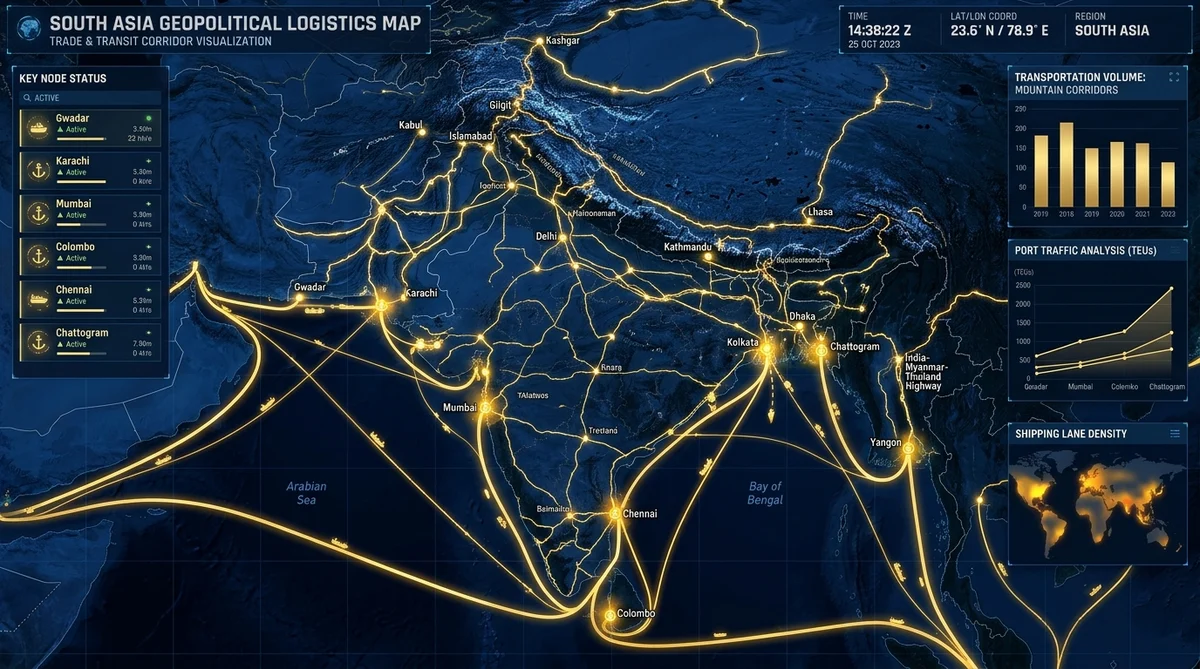
The 13th Edition of the Global Terrorism Index (GTI 2026) records a historic geographic migration of asymmetric political violence: while global terrorism fatalities dropped 28%, Pakistan surged by 24% to become the world's most impacted nation, suffering 1,139 deaths across 1,045 attacks. Over 74% of all violent strikes were concentrated along the 2,600 km Durand Line across Khyber Pakhtunkhwa and Balochistan. Operating as a force multiplier, an unprecedented tactical hybridization between the Tehrik-e-Taliban Pakistan (TTP) and the Baloch Liberation Army (BLA) has fused Deobandi religious insurgency with secular ethno-nationalist separatism—waging an integrated campaign of cognitive warfare and transit interdiction against China's $62-billion China-Pakistan Economic Corridor (CPEC) and the deep-water port of Gwadar.
1. Macro Telemetry: The GTI 2026 Global Paradigm Shift
In the discipline of strategic conflict analysis, irregular warfare rarely remains geographically static. When counterinsurgency pressures intensify in one theater or external state patrons reconfigure their border enforcement posture, violent non-state networks migrate toward lines of least sovereign resistance. The release of the 13th Edition of the Global Terrorism Index (GTI 2026) by the Institute for Economics & Peace (IEP) provides undeniable statistical verification of this structural relocation.
While global terror fatalities dropped by 28% to 5,582 deaths and total worldwide violent incidents fell by 22% to 2,944 (the lowest recorded global frequency since 2007), Pakistan officially displaced Burkina Faso, Mali, and Afghanistan to rank as the single most impacted nation on Earth. Fatalities within Pakistan surged by 24% year-on-year, logging 1,139 documented deaths across 1,045 separate attacks.
| Strategic Metric | Global Audit Record | Pakistan Audit Record | Tactical Implication |
|---|---|---|---|
| Total Fatalities | 5,582 deaths (▼ 28% decrease) | 1,139 deaths (▲ 24% surge) | Pakistan absorbs over 20% of all worldwide terrorism fatalities. |
| Total Incidents | 2,944 attacks (▼ 22% decrease) | 1,045 recorded strikes | Hyper-fragmented asymmetric attrition targeting static garrisons. |
| Geographic Cluster | Sahel & Horn of Africa (>50%) | > 74% in KP & Balochistan | Total concentration along the 2,600 km Durand Line corridor. |
| Primary Perpetrators | Islamic State (IS) & JNIM | TTP (637 deaths, 56%) & BLA / BLF | Emergence of an integrated Deobandi-Ethno-Nationalist operational alliance. |
This macro divergence exposes three crucial analytical realities:
- The Afghan-Sahel Displacement: While the African Sahel remains the geographic epicenter of rural mass-casualty insurgencies, Pakistan has emerged as the most lethal single sovereign battlespace, absorbing the collateral shock of post-withdrawal Afghanistan.
- Durand Line Ungovernability: Over 74% of all violent kinetic actions in Pakistan are confined to Khyber Pakhtunkhwa (KP) and Balochistan, transforming the British-era colonial border into an ungoverned irregular sanctuary.
- Dual-Vector Attribution: The Tehrik-e-Taliban Pakistan (TTP) accounted for 637 fatalities (56% of the national total), while Baloch separatist formations—chiefly the Baloch Liberation Army (BLA) and Baloch Liberation Front (BLF)—inflicted the overwhelming majority of remaining casualties.
2. Cognitive Warfare as an Asymmetric Force Multiplier
Conventional counter-terrorism doctrine frequently commits the error of analyzing insurgent groups exclusively through kinetic metrics: body counts, ammunition expended, and checkpoint ambushes. However, the 2025–2026 operational campaign along the Durand Line reveals that irregular networks are waging advanced cognitive warfare—utilizing kinetic strikes as psychological triggers to induce reflexive paralysis among state elites and foreign economic patrons.
In modern strategic theory, cognitive warfare is defined as the weaponization of public perception, institutional trust, and decision-making architecture to compel an adversary into self-defeating behaviors. In the Pakistan-China operational theater, this strategy functions across three distinct cognitive dimensions:
1. Reflexive Control Over Chinese Capital Calculus: The BLA’s elite fidayeen wing, the Majeed Brigade, does not seek to capture territory from the Pakistan Army. Instead, its operational design is tailored for cognitive shock: executing high-profile suicide strikes against Chinese engineers, airport transit convoys in Karachi, and executive compounds in Gwadar (such as the Pearl Continental and Gwadar Port Authority complex). By demonstrating that the Pakistani state cannot guarantee the physical survival of Chinese personnel, the BLA manipulates Beijing’s strategic risk calculus. Chinese state insurance giants (such as Sinosure) have repeatedly downgraded Pakistan’s sovereign risk rating, forcing the State Council to freeze commercial disbursements for CPEC Phase-II.
2. Asymmetric Narrative Dominance: Both the TTP (through Umar Media) and the BLA (through Hakkal Media) operate sophisticated, decentralized digital dissemination ecosystems across Telegram, Signal, and X. Within minutes of a kinetic ambush on a Frontier Corps outpost or an IED strike against a military convoy, insurgent media units publish multi-angle 4K combat footage, drone surveillance overflights, and operational declarations. This instant transparency systematically out-maneuvers the Inter-Services Public Relations (ISPR) apparatus, whose delayed statements and defensive denials are perceived by local populations as cognitive containment.
3. Cognitive Capture of Border Enforcement Regimes: As detailed in our foundational guide to narrative warfare & cognitive conflict, sub-threshold coercion succeeds when the target population and local law enforcement psychologically internalize the inevitability of the shadow system. In Balochistan, the multi-tiered Parchi extortion system has achieved cognitive normalization: state border guards, police, and district commissioners view the illicit fuel trade not as criminal subversion, but as an indispensable socioeconomic safety valve, destroying the sovereign state's institutional will to enforce border laws.
3. Tactical Convergence: The TTP–BLA Hybridization Model
Historically, an operational alliance between the Tehrik-e-Taliban Pakistan and Baloch ethno-nationalist separatists was considered doctrinally impossible. The TTP is an ultra-conservative Deobandi Islamist movement dedicated to establishing an Islamic Caliphate governed by strict Sharia law, historically aligned with Al-Qaeda. In stark contrast, the BLA and BLF are secular, Marxist-rooted ethno-nationalist movements demanding sovereign autonomy for the Baloch homeland against Pakistani federal centralization.
Yet, field telemetry from 2025 and 2026 confirms that operational pragmatism has superseded ideological incompatibility. The TTP and BLA have forged a resilient non-aggression pact and logistical clearinghouse:
The Two-Front Strategic Attrition Axis
NATO Weapons Pipeline
TTP transfers abandoned U.S. thermal optics, AN/PVS-14 goggles, and M4 carbines from Afghan border stockpiles south to BLA strike squads.
Sanctuary & Intel Sharing
BLA provides southern desert safe houses and intelligence on military transit routes in exchange for TTP explosives and VBIED technical expertise.
Two-Front Army Strain
GHQ Rawalpindi is forced to simultaneously defend northern KP garrisons (Bannu, D.I. Khan) and southern CPEC transport lines (M-8, N-10).
The NATO Weapons Pipeline Along the Durand Line
Following the August 2021 U.S. military withdrawal from Afghanistan, over $7.1 billion in high-grade military hardware remained in the country. Within 24 months, these arsenals—including Colt M4 carbines, FN SCAR rifles, M16A4s fitted with Trijicon ACOG sights, and third-generation AN/PVS-14 night-vision devices—migrated into the irregular marketplace.
Surviving security personnel debriefed after the May 24, 2026 Quetta military train bombing (which killed 30 and wounded 50) and recent attacks along the N-25 highway confirmed that BLA assault squads were equipped with identical suppressed 5.56mm carbines and FLIR thermal optics previously documented exclusively in TTP elite units (*Special Task Group*). This technological parity has completely erased the tactical night-fighting advantage historically enjoyed by the Frontier Corps.
BLA Multi-Domain Structural Diversification
As documented in our classified field assessments, the BLA conducted 521 recorded attacks in 2025 alone, signaling its evolution from a fragmented rural guerrilla movement into a modern, multi-domain irregular army featuring four specialized branches:
- The Majeed Brigade: An elite fidayeen suicide brigade dedicated to complex, vehicle-borne improvised explosive device (VBIED) attacks and infiltration strikes against high-value strategic targets.
- The Fateh Squad: A mobile, heavy-weapons commando wing deployed to storm fortified Frontier Corps cantonments and execute highway interdictions.
- The Hammal Maritime Defence Force: A dedicated coastal warfare unit tasked with sabotage operations against Gwadar Port facilities, offshore fuel docks, and naval security vessels.
- The Qazi Aero Hive Rangers: An autonomous drone reconnaissance and weaponized loitering munition unit utilizing commercial quadcopters modified to drop mortar rounds on military perimeters.
4. The Chokepoint War on CPEC & Gwadar
The China-Pakistan Economic Corridor (CPEC) is the crown jewel of Beijing's $1-trillion Belt and Road Initiative (BRI). Designed to link China's landlocked western province of Xinjiang directly to the deep-water Arabian Sea port of Gwadar, CPEC was intended to resolve Beijing’s "Malacca Dilemma" by offering a secure, overland energy pipeline that bypasses the contested maritime chokepoints of Southeast Asia.
However, between 2024 and 2026, Balochistan and Khyber Pakhtunkhwa have transformed into a graveyard for CPEC infrastructure:
| Target Vector | Tactical Mechanism | Strategic Vulnerability Created | Operational Impact |
|---|---|---|---|
| Gwadar Port Complex & Free Zone | Complex VBIED strikes, armed assaults on GPA complex and luxury transit hotels. | Municipal lockdown; Gwadar functions as a militarized island cut off from hinterlands. | Port Paralyzed (Zero Commercial Cargo) |
| Makran Coastal Hwy (N-10) & M-8 Route | Guerrilla checkpoints, bus passenger profiling, and fuel tanker ambushes. | Overland freight between Karachi and Gwadar completely severed for unescorted civilian trucks. | Logistics Interdicted |
| Hydropower & Engineering Convoys (Dasu) | Suicide vehicle ambushes targeting shuttle buses of Chinese hydraulic engineers. | PRC state contractors withdraw engineering personnel, halting mega-dam construction. | Multi-Year Construction Freezes |
The Division-Level Security Failure
To shield Chinese personnel and assets, the Pakistan Army deployed two dedicated, division-sized formations: the 34th Light Infantry Division (tasked with protecting northern CPEC transit routes across KP and Gilgit-Baltistan) and the 44th Infantry Division (stationed at Gwadar to secure the southern port perimeter). Together, these units comprise over 30,000 active troops dedicated exclusively to infrastructure defense.
Yet, despite barbed-wire perimeters, thermal surveillance towers, and armored escort battalions, insurgent commandos have repeatedly breached secure perimeters. This systemic failure has sparked intense diplomatic acrimony between Beijing and Rawalpindi. During bilateral security summits in late 2025 and 2026, the Chinese Ministry of State Security (MSS) formally demanded authorization to deploy Chinese Private Security Companies (PSCs) and direct People's Liberation Army (PLA) liaison detachments on Pakistani soil to guard their own citizens. GHQ Rawalpindi has vehemently resisted, viewing foreign armed garrisons inside Pakistan as an existential compromise of sovereign military authority.
5. The Illicit War Economy: The Balochistan–Iran Smuggling Axis
A central question in modern asymmetric conflict analysis is financial sustainability: how do non-state insurgent groups maintain multi-year, high-tempo combat campaigns against a nuclear-armed state without open state sponsorship? The answer lies in the empirical findings of the joint Intelligence Bureau (IB) and Inter-Services Intelligence (ISI) classified audit on the Balochistan-Iran petroleum smuggling corridor.
Across the southwestern border between Iranian Sistan-Baluchestan and Pakistani Balochistan operates an untraceable, cash-based shadow war economy generating an estimated $1 billion to $2 billion annually:
1. The 25,000-Truck Zambad Logistics Pipeline: Over 25,000 modified blue Zamyad Z24 pickup trucks (*Zambads*) operate across remote desert border tracks (including Mashkel, Jalgi, and Saravan). Each truck ferries between 2,000 to 3,500 liters of heavily subsidized Iranian diesel and petrol per trip, unloading at clandestine storage yards (*karkhanas*) equipped with industrial underground decanting tanks.
2. The 2,094 Illegal Dabba Retail Pumps: Audits conducted by the Federal Board of Revenue (FBR) and the Oil and Gas Regulatory Authority (OGRA) identified 2,094 unregistered, illegal retail fuel stations (*Dabba pumps*) operating across Balochistan, Sindh, and Punjab. These un-metered dispensers launder smuggled petroleum directly into Pakistan's domestic consumer market, depriving the national treasury of an estimated PKR 200+ billion in annual petroleum levies.
3. Institutionalized Transit Extortion (The Parchi System): Militant and insurgent networks extract mandatory protection fees at every geographic chokepoint along the route:
- Jaish al-Adl: Operates informal desert toll checkpoints near Saravan and Jalgi, levying PKR 2,000 to PKR 5,000 (1,000,000 to 2,500,000 Iranian Rials) per Zambad truck as mandatory "border clearance."
- The BLA & BLF: Enforce an institutionalized "national revolutionary tax" on commercial 40,000-liter mega-tankers traversing the M-8 motorway and N-10 Coastal Highway. Transporters purchase color-coded paper tokens (*parchis*) or encrypted WhatsApp clearance codes. Tankers that attempt transit without a valid insurgent *parchi* are intercepted and torched by armed squads.
- ISKP (Islamic State Khorasan): Runs extortion and targeted kidnapping networks in the Bolan Pass and Mastung, shaking down fuel brokers and Hawala dealers to fund urban safe houses.
4. Trade-Based Money Laundering & FATF Greylisting Risk: Because formal commercial banking between Iran and Pakistan is paralyzed by U.S. OFAC sanctions, over 90% of cross-border energy transactions are settled through informal Hawala/Hundi networks and illicit commodity barter. Pakistani cartels offset their Iranian fuel debts by smuggling subsidized agricultural staples—specifically wheat, sugar, and urea fertilizer—out of Pakistan into Iran. This shadow circuit not only starves the Pakistani population of food staples, but directly violates FATF recommendations on Counter-Terrorism Financing (CFT), pushing Pakistan toward immediate FATF greylisting and threatening its external sovereign debt restructuring.
6. Cross-Crisis Strategic Convergence: Pakistan, Nepal & The Malacca Dilemma
The asymmetric crisis unfolding across Pakistan cannot be viewed in geopolitical isolation. It represents the western flank of a broader, compounding systemic crisis facing China's Belt and Road infrastructure across Eurasia. When cross-referenced against telemetry from other strategic conflict theaters, two profound geopolitical intersections emerge:
1. Twin BRI Infrastructure Fractures: Himalayas vs. Arabian Sea: In our investigative dossier on The Nepal Crisis: $2.5B BRI Dam Collapse & Border Shock, ICS documented how Beijing’s northern infrastructure corridor was decimated by high-altitude geotechnical instability and glacial collapses across the Trishuli valley. Across Pakistan, China's southern BRI corridor is facing an identical collapse, driven not by ecological fractures, but by asymmetric irregular warfare. In both theaters, Beijing treated complex frontier terrain as an engineering sandbox, only to see multi-billion-dollar fixed capital investments paralyzed by local chokepoints.
2. The Malacca Cork Strategic Paradox: Gwadar Port was constructed to free China from the strategic vulnerability of maritime chokepoints. Yet, with Gwadar locked down under permanent military quarantine and threatened by the BLA’s Hammal Maritime Force, Beijing’s energy lifeline remains forced through the maritime choke of Southeast Asia. As detailed in our analysis of The Malacca Cork: Great Nicobar Island & Maritime Deterrence, India's expanding naval airbase at Great Nicobar Island holds the geographic stopper on China’s sea lanes of communication, effectively trapping Chinese commercial logistics between an insecure Arabian Sea port and a fortified Indian Ocean chokepoint.
Furthermore, as non-state asymmetric coercion proliferates from the Red Sea and Bab el-Mandeb chokepoint to the Makran coast, global maritime transit is consolidating around fortified sovereign maritime hubs, accelerating regional interest in India's alternative Chabahar–INSTC corridor in Iranian territory, which deliberately bypasses volatile Pakistani chokepoints.
7. Geopolitical Fallout: Pakistan's "Compellence Trap"
Faced with an escalating two-front insurgency, the Pakistani state has succumbed to what strategic theorists term a "Compellence Trap": attempting to use kinetic military power to force an external actor to halt actions that are fundamentally rooted in domestic political failure.
In response to soaring casualties, Islamabad initiated nationwide counter-terrorism operation Azm-e-Istehkam. In February 2026, Pakistan declared an operational state of war, launching cross-border airstrikes into sovereign Afghan territory targeting suspected TTP staging hubs in Kabul and Kandahar, displacing over 115,000 civilians. However, kinetic deterrence failed completely. The Afghan Taliban government in Kabul has steadfastly refused to suppress the TTP, viewing them as ideological kin and Pashtun brethren who provided vital battlefield support during their 20-year guerrilla campaign against the United States.
Militarily exhausted and economically bankrupt, Pakistan was forced in mid-2026 to accept Chinese-brokered trilateral security negotiations in Urumqi. This diplomatic surrender formally transferred regional arbiter status to Beijing. The Chinese Communist Party now directly conditions future debt roll-overs, emergency currency swaps, and CPEC Phase-II investments on verifiable, third-party security guarantees—effectively reducing Islamabad's sovereignty over its western borderlands to a client-state holding action.
8. Dr. Chokepoint & Radar the Owl: Strategic Realist Takeaway
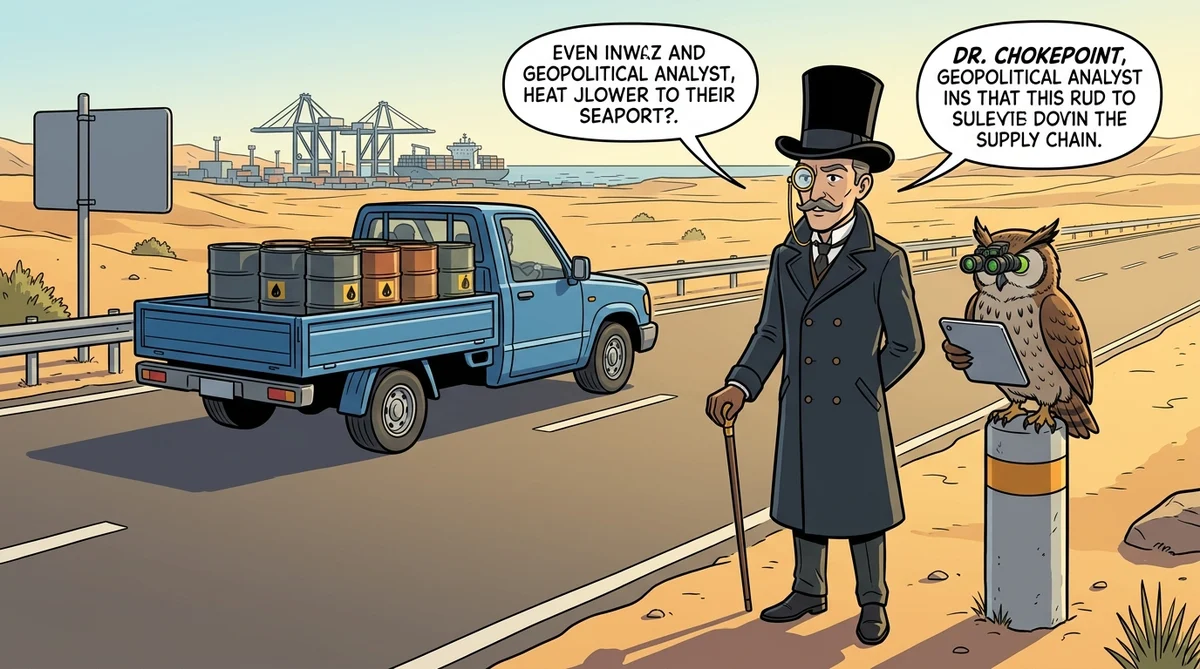
🎩 Dr. Chokepoint Analysis: "Great Powers build high-security concrete highways and deep-water container docks, yet fail to grasp that political geography is governed by the informal economy. You cannot impose a $62-billion hyper-modern transit corridor upon a desert province whose population survives on illicit Iranian diesel and where insurgent toll gates out-earn the provincial revenue board. When non-state actors master cognitive warfare and fuse with the shadow economy, the conventional army's perimeter towers become monuments of tactical irrelevance."
🦉 Radar's Cynical Take: "Belt and Road in Balochistan: Two infantry divisions guarding empty asphalt, 521 militant strikes in twelve months, Chinese engineers confined to fortified hotel bunkers, and 25,000 blue pickup trucks running the border tax-free. What a glorious 21st-century trade gateway!"
9. Primary Intelligence Telemetry & Verification Bibliography
This strategic intelligence assessment synthesizes declassified government submissions, institutional audits, and primary field records preserved in the ICS Threat Registry:
- Institute for Economics & Peace (2026). Global Terrorism Index 2026: Measuring the Impact of Terrorism (13th Edition). IEP Sydney & New York. Global statistical registry, regional fatality shifts, and AfPak-Sahel comparative telemetry.
- National Counter Terrorism Authority & FATF Compliance Directorate (2025). Counter-Terrorism Financing Audit: Militant Transit Extortion and Trade-Based Money Laundering in the Western Borderlands. Islamabad. Field documentation of Zambad fuel tolls, Jaish al-Adl transit levies, and Hawala banking.
- Apex Committee on Anti-Smuggling & National Economic Recovery (2024). Classified Joint Intelligence Dossier (IB / ISI Directorate for Economic Security). Prime Minister’s Secretariat, Islamabad. Forensic mapping of 29 political patrons, 90+ collusive checkpoint officers, and 2,094 illegal Dabba retail pumps.
- Strategic Study India Research Registry (2026). "Pakistan: BLA Rampage In Balochistan – Analysis & Multi-Domain Expansion." Technical review of Majeed Brigade VBIED mechanics, Fateh Squad commandos, and Hammal Maritime sabotage.
- Pakistan Institute of Development Economics (PIDE) (2024). The Political Economy of Border Trade: Informal Fuel Smuggling, Livelihoods, and State Absence in Balochistan. Policy White Paper No. 118, Islamabad.
Key Strategic Takeaways
- GTI 2026 Paradigm Shift: Pakistan surged by 24% to become the world's most impacted nation (1,139 deaths across 1,045 attacks), concentrating over 74% of strikes along the Durand Line in KP and Balochistan.
- TTP–BLA Hybridization: Religious fundamentalists and secular ethno-nationalists have formed a pragmatic tactical axis, sharing post-withdrawal NATO weapons, thermal optics, and intelligence.
- Cognitive Warfare Dominance: Insurgent digital media wings systematically out-communicate state organs, inducing acute risk aversion in Beijing and paralyzing CPEC Phase-II financing.
- The $2B Smuggling War Engine: 25,000+ Zambad pickups and 2,094 illegal fuel stations provide untraceable cash through Hawala/Hundi and TBML barter, triggering critical FATF greylisting risk.
- The CPEC & Gwadar Chokepoint: Multi-billion-dollar transit corridors remain operationally interdicted despite two dedicated Pakistani army security divisions, prompting Chinese demands for foreign PSC deployment.
- Twin BRI Infrastructure Collapse: China's Belt and Road faces simultaneous paralysis across the Himalayan ecological disaster in Nepal and the Arabian Sea asymmetric ambush in Balochistan.
Expert Analysis — Bhanu Pratap Meena
"The findings of the Global Terrorism Index 2026 confirm that the Durand Line has become the primary laboratory for modern asymmetric warfare. By treating the border crisis as an isolated kinetic problem while permitting an institutionalized $2-billion smuggling cartel to fund non-state networks, Pakistan has trapped itself in an un-winnable two-front conflict. For Beijing, the dream of an overland Arabian Sea energy bypass is dying in the sands of Makran—leaving China trapped in the very maritime chokepoints CPEC was engineered to escape."
Related Strategic Intelligence: Explore our operational breakdown on The Nepal Crisis: $2.5B BRI Dam Collapse & Border Shock and read our geopolitical analysis of The Malacca Cork: Great Nicobar Island & Maritime Deterrence.
Need a Deeper Operational or Threat Assessment?
International Conflict Studies provides custom open-source intelligence dossiers, geopolitical risk modeling, and critical infrastructure threat diagnostics for enterprise and sovereign decision-makers.
Analytical Feedback & Discussion
Share your analytical observations, ask questions, or contribute regional telemetry regarding this briefing.