
Microsoft Cyber Attack or Outage? 5 Outlook Alternatives
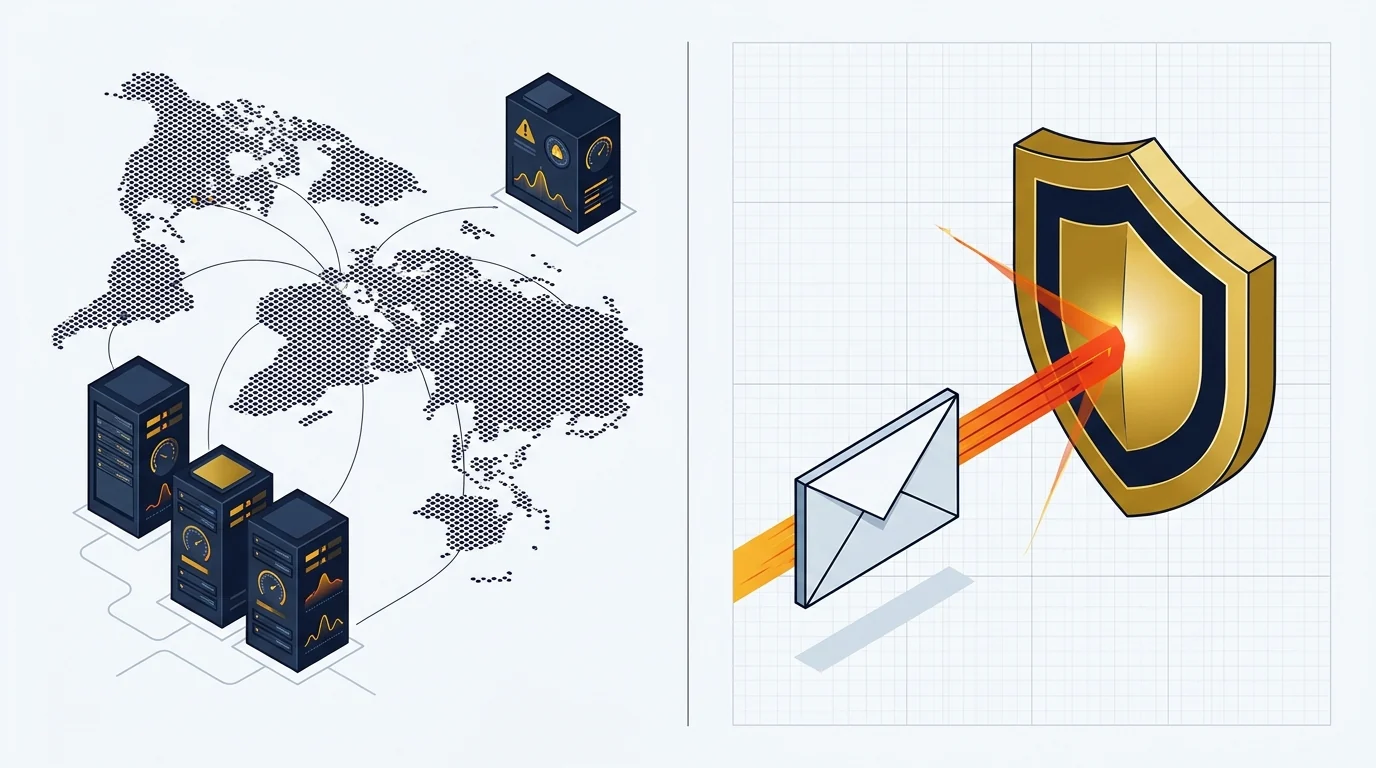
The November 12, 2026 disruption across 74 countries was not a Microsoft cyber attack—it was an internal server health-check and connection-handling cascade. However, it struck 48 hours after Microsoft patched CVE-2026-124194 (CVSS 6.5, CISA KEV), an actively exploited classic Outlook spoofing flaw leaking NTLMv2 hashes over outbound TCP 445. To eliminate Exchange monoculture risk, enterprises must separate independent mail hosts (Google Workspace, Proton Mail, Zoho Mail) from client overlays (Missive, Superhuman).
November 12, 2026: Within minutes, email queues froze across 74 countries. UK National Health Service (NHS) clinics lost appointment synchronization, the UK Supreme Court experienced mail disruption, and Euronext market participants reported Outlook and Microsoft 365 connectivity failures. Across search engines and security operations centers (SOCs), one question spiked instantaneously: was this a coordinated Microsoft cyber attack?
The short operational answer is no—but the panic was entirely rational. Just 48 hours earlier, on November 10 Patch Tuesday, Microsoft disclosed and patched CVE-2026-124194 (CVSS 6.5), an actively exploited zero-day spoofing vulnerability in classic Outlook that CISA immediately added to its Known Exploited Vulnerabilities (KEV) catalog. When two high-severity disruptions strike the same enterprise communications backbone within 48 hours, conflating an availability cascade with a credential-theft exploit becomes a critical risk-management failure.

Was the November 12 Disruption a Microsoft Cyber Attack or Infrastructure Overload?
Every major cloud outage now triggers immediate attribution anxiety because modern critical infrastructure exhibits extreme hub concentration. As documented in our analysis of simultaneous AI and cloud chokepoints, when a single provider carries sovereign courts, hospital networks, and financial exchanges, an internal routing fault produces the exact macroeconomic signature of a kinetic or cyber blockade.
According to Microsoft Service Health telemetry, the November 12 disruption was triggered by an internal server health-check and connection-handling process that became overwhelmed, dropping Exchange Online and Microsoft 365 authentication and mailbox sessions across 74 countries. There was no external intrusion, ransomware payload, or BGP hijack.
Epistemic Audit: Fact vs. Pattern vs. Implication
- Verified Fact: The Nov 12, 2026 outage across 74 countries stemmed from an internal connection-handling overload—not a Microsoft cyber attack.
- Verified Fact: Two days prior (Nov 10), Microsoft patched CVE-2026-124194, a real zero-day in classic Outlook actively exploited in the wild.
- Structural Pattern: Enterprise reliance on a single Exchange Online control plane turns routine software health-check regressions into cross-sector institutional paralysis.
- Strategic Implication: Security teams must patch CVE-2026-124194 immediately while evaluating architectural email redundancy outside the Microsoft monoculture.
CVE-2026-124194: The Active Outlook Zero-Day Behind the Cyber Attack Fears
While November 12 was an availability failure, the underlying fear of a Microsoft cyber attack was anchored in very real threat intelligence. On November 10, 2026, Microsoft and the CISA Known Exploited Vulnerabilities Catalog confirmed active exploitation of CVE-2026-124194 (CVSS v3.1 score: 6.5).
Unlike cloud-side availability bugs, CVE-2026-124194 targets the classic Microsoft Outlook desktop client inside Microsoft 365 Apps for Enterprise, Office LTSC 2021, and Office LTSC 2024. By crafting a specially engineered email or calendar object, an attacker forces Outlook to initiate an outbound connection over SMB (TCP port 445) to an adversary-controlled server. Windows automatically attempts NTLM authentication, leaking the victim's NTLMv2 password hash—often without the user clicking a single link.
For SOCs tracking the top cyber attacks of 2026, this vector is textbook pre-ransomware credential harvesting. Captured NTLMv2 hashes can be relayed or cracked offline to compromise Active Directory domain controllers and VPN gateways. As we noted in The Attribution Trap, separating noisy public outages from silent credential-theft exploits is essential so incident responders do not drop their perimeter guard.
Immediate Defensive Checklist for Exchange & Outlook Administrators
- Deploy November 10 Patches: Enforce the November 2026 security updates across all Microsoft 365 Apps for Enterprise and Office LTSC 2021/2024 endpoints.
- Egress Block TCP 445: Block outbound SMB traffic (TCP port 445) at every corporate perimeter firewall and remote-access VPN split-tunnel policy to sever NTLMv2 leakage paths.
- Audit Classic vs. New Outlook: Inventory endpoints still running legacy Win32 classic Outlook COM integrations and restrict NTLM outbound authentication via Group Policy.
Host vs. Client Architecture: Why Most Outlook Alternatives Still Fail in an Outage
Whenever a global Microsoft 365 outage hits, IT directors rush to search for Microsoft Outlook alternatives. However, most procurement comparisons miss the single most important technical distinction in enterprise email: Mail Host vs. Client Overlay.
If your organization switches to a sleek desktop email client that still connects to Microsoft Exchange Online via OAuth or Graph API, you have only changed the windshield—you are still driving on the same road. When Exchange Online's health-check layer collapses, client overlays go dark simultaneously. True resilience against a cloud outage or targeted Microsoft cyber attack requires either migrating to an independent mail host or maintaining a secondary non-Microsoft MX/IMAP domain for executive and incident-response communications.
Top 5 G2 Enterprise Alternatives to Microsoft Outlook (2026 Comparison)
Using verified enterprise category rankings on G2.com, we evaluated the top five alternatives to Microsoft Outlook—explicitly separating independent cloud mail hosts from workflow client overlays.
| Rank | Platform | Architecture Type | Survives Exchange Outage? | Primary Enterprise Strength |
|---|---|---|---|---|
| #1 | Google Workspace | Independent Cloud Host | Yes (Separate Infrastructure) | Global uptime, browser-native zero-SMB attack surface |
| #2 | Proton Mail for Business | Independent Encrypted Host | Yes (Swiss Infrastructure) | Zero-access E2E encryption, strict Swiss privacy law |
| #3 | Zoho Mail | Independent Cloud Host | Yes (Separate Infrastructure) | High-margin SMB custom domain hosting + Streams |
| #4 | Missive | Collaborative Client Layer | Conditional (If using IMAP/Google) | Shared team inboxes + internal chat on threads |
| #5 | Superhuman Mail | Executive Client Layer | Conditional (Requires Google Backend) | Sub-100ms keyboard triage & VIP split inbox |
1. Google Workspace (Gmail for Business) — Best Overall Independent Host
Holding a ~4.6/5 rating across thousands of verified G2 reviews, Google Workspace remains the primary enterprise alternative to Microsoft 365. Because Gmail operates on Google's autonomous global server fleet and browser-first architecture, it is structurally immune to Exchange Online control-plane cascades and eliminates legacy Win32 desktop SMB/NTLMv2 exposure like CVE-2026-124194.

2. Proton Mail for Business — Best for Zero-Access Encryption & Sovereign Privacy
For defense contractors, legal teams, and intelligence-adjacent organizations seeking insulation from both U.S. cloud monocultures and credential-harvesting exploits, Proton Mail for Business offers end-to-end zero-access encryption under Swiss jurisdiction. Even if an upstream perimeter is probed, stored mailbox payloads remain cryptographically unreadable to third parties.

3. Zoho Mail (Zoho Workplace) — Best Value Independent Custom-Domain Host
Zoho Mail delivers an independent, ad-free custom-domain cloud mail host at a fraction of Microsoft 365 E3/E5 licensing costs. Its built-in Streams feature replaces noisy internal email forwards with inline @mention discussions, making it a strong secondary or primary host for mid-market operations and distributed teams.

4. Missive — Best Collaborative Shared-Inbox Client (~4.7/5 G2)
Rated ~4.7/5 on G2, Missive excels for security operations, customer support, and dispatch teams managing shared addresses (soc@, ops@, info@). Crucially, Missive supports generic IMAP and Google Workspace alongside Microsoft 365—meaning teams can pair Missive's collaborative UI with a non-Microsoft mail host to maintain outage resilience.

5. Superhuman Mail — Best High-Speed Executive Client (~4.7/5 G2)
Also rated ~4.7/5 on G2, Superhuman Mail is engineered for executives processing hundreds of messages daily via keyboard shortcuts and AI-assisted triage. Architectural caveat: Superhuman is strictly a client layer that requires either a Google Workspace or Microsoft 365 backend. To stay online during a Microsoft outage, Superhuman users must run on Google Workspace.

Frequently Asked Questions
FAQ: Microsoft Outage, CVE-2026-124194 & Email Resilience
Was the November 12, 2026 Microsoft 365 and Outlook outage a cyber attack?
No. Microsoft confirmed the November 12, 2026 disruption across 74 countries was caused by an internal server health-check and connection-handling process overload, not a malicious Microsoft cyber attack.
What is CVE-2026-124194 in Microsoft Outlook?
CVE-2026-124194 (CVSS 6.5, listed on CISA's Known Exploited Vulnerabilities catalog) is an actively exploited spoofing flaw in classic Microsoft Outlook that leaks NTLMv2 hashes over outbound SMB (TCP 445) connections.
Which top G2 Outlook alternatives actually eliminate Exchange Online outage risk?
Independent cloud mail hosts—Google Workspace, Proton Mail for Business, and Zoho Mail—operate on separate infrastructure and eliminate Exchange Online dependency. Missive can also avoid Exchange via IMAP or Google Workspace, whereas Superhuman requires a Google or Microsoft backend.
Expert Analysis — ICS Editorial Board
"International Conflict Studies Research Directorate: Strategic intelligence assessments in the Critical Infrastructure Vulnerabilities arena indicate shifting operational dynamics. The technical telemetry and incident vectors analyzed here reveal calculated adjustments by state and non-state actors to exploit structural vulnerabilities before defensive countermeasures can be deployed. Continuous technical and geospatial verification remains paramount."
Related Domain Analysis: Explore our coverage of Hybrid Warfare & Cyber Security.
Topical Bibliography & References
- Microsoft Corporation (2026). "Microsoft 365 Service Health & Incident Post-Incident Review (November 12, 2026 Global Outage)" Microsoft Cloud Status Telemetry. [Source Link ↗]
- Cybersecurity and Infrastructure Security Agency (CISA) (2026). "Known Exploited Vulnerabilities Catalog: CVE-2026-124194 Microsoft Outlook Spoofing Vulnerability" CISA KEV Registry. [Source Link ↗]
- G2 Crowd (2026). "Top Microsoft Outlook Alternatives & Competitors (Enterprise Email & Client Rankings)" G2 Verified Software Category Index. [Source Link ↗]
- Farrell, H., & Newman, A. L. (2019). "Weaponized Interdependence: How Global Economic Networks Shape State Coercion" International Security, 44(1), 42–79. [Source Link ↗]
Key Takeaways
- Two Distinct Incidents: The Nov 12 global M365 outage was a non-malicious server connection failure, whereas CVE-2026-124194 (patched Nov 10) is an active NTLMv2 credential-theft zero-day in classic Outlook.
- Immediate Mitigation: Patch Microsoft 365 Apps for Enterprise and Office LTSC 2021/2024 immediately, and block outbound SMB (TCP port 445) at perimeter firewalls.
- Architectural Resilience Matters: Only independent mail hosts (Google Workspace, Proton Mail for Business, Zoho Mail) insulate an enterprise from Exchange Online control-plane outages.
- Client Overlays Carry Host Dependency: Missive (via IMAP/Google) can decouple from Exchange, while Superhuman Mail requires either Google Workspace or Microsoft 365 as its underlying mail server.
Need a Deeper Operational or Threat Assessment?
International Conflict Studies provides custom open-source intelligence dossiers, geopolitical risk modeling, and critical infrastructure threat diagnostics for enterprise and sovereign decision-makers.
Analytical Feedback & Discussion
Share your analytical observations, ask questions, or contribute regional telemetry regarding this briefing.