
The Top 11 Cyber Attacks of 2026: Vectors, Attribution, and Real-World Global Fallout
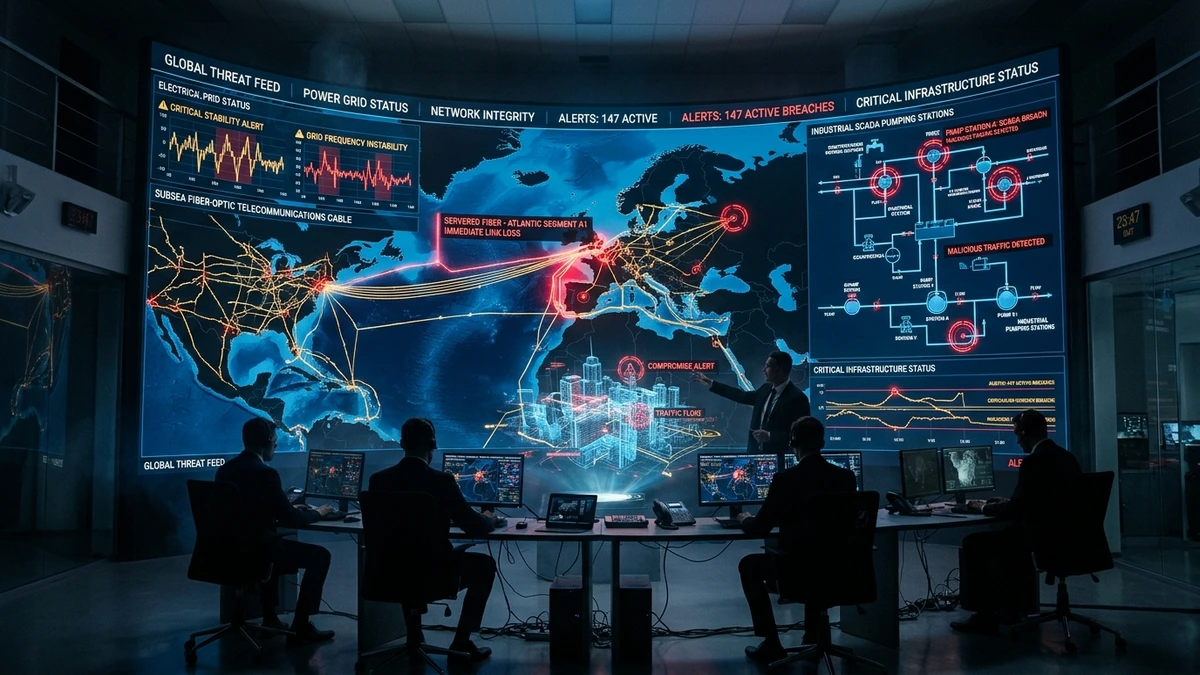
A ground-truth forensic audit of the Top 11 Cyber Attacks of 2026, documenting how cyber warfare decisively crossed the Rubicon from virtual data extortion to physical thermodynamic and critical infrastructure interdiction across 5 continents.
The year 2026 marks the historical inflection point where global cyber warfare crossed the threshold from virtual data extortion into thermodynamic and physical infrastructure interdiction. Modern threat actors—spanning state-sponsored Advanced Persistent Threats (APTs) such as Salt Typhoon and Volt Typhoon to asymmetric cyber syndicates like HellCat and SafePay—abandoned perimeter-focused attacks. Instead, they operationalized Henry Farrell and Abraham Newman’s doctrine of Weaponized Interdependence: targeting centralized cloud monopolies, memory-resident processes, and industrial control systems (ICS/SCADA) to force compound civilian and logistical friction.
========================================================================================================
                          THE 2026 CROSS-DOMAIN INFRASTRUCTURE INTERDICTION LADDER
========================================================================================================

                 [LAYER 4: IDENTITY & CERTIFICATES (ROOT OF TRUST)]
                 • DigiCert Migration Leak  • WorkOS AI Scraping  • mSecure Database Intrusion
                 Vector: Stealing legitimate tokens to bypass MFA and hardware perimeter defenses.
                                        │
                                        ▼
                 [LAYER 3: HYPERSCALE CLOUD & TELECOMMUNICATIONS BACKBONES]
                 • AWS us-east-1 DynamoDB DNS Collapse  • Salt Typhoon Tier-1 Telecom Wiretaps
                 • Microsoft Azure ExpressRoute Freeze  • PHP2Shell In-Memory C2 Reverse Shells
                 Vector: Weaponized Interdependence—poisoning centralized hubs and fallback rails.
                                        │
                                        ▼
                 [LAYER 2: SUPPLY CHAIN & SCADA FIRMWARE CONTROL]
                 • Schneider Electric Jira Source Exfiltration  • Blue Yonder ERP Logistics Paralysis
                 Vector: Stealing PLC engineering schematics to prepare zero-day hardware interdictions.
                                        │
                                        ▼
                 [LAYER 1: THERMODYNAMIC & PHYSICAL KINETIC FAILURE]
                 • European Cold Chain Overrides  • French Blood Bank (EFS) Spoilage
                 • Sri Lanka / Cuba / Nigeria Power Grid Cascade Collapse
                 Vector: Physical setpoint manipulation forcing non-recoverable biological & grid spoilage.
========================================================================================================
1. Master Comparative Register: The 11 Defining Attacks of 2026
The operational audit below details the 11 decisive cyber operations of 2026 across primary attack vectors, geographic epicenters, attribution, and macroeconomic consequences:
| # | Operation / Incident | When & Where | Attack Vector & CVE | Threat Actor | Quantitative Impact | Strategic Fallout |
|---|---|---|---|---|---|---|
| 1 | PHP2Shell Contagion | Oct 21, 2026 Global (US/EU/Asia) |
PHP-FPM socket memory corruption; volatile RAM C2 (CVE-2026-109618) | Multi-state espionage & botnet syndicates | 3.4M+ servers hit; $4.2B triage loss |
Shattered coordinated disclosure; forced in-memory attestation. |
| 2 | Salt Typhoon Telecom Wiretaps | Aug–Nov 2026 United States |
Cisco/Juniper router breach; CALEA lawful intercept feeds | Salt Typhoon (PRC MSS) | Millions of CDRs & wiretaps compromised | Compromised US court wiretaps; forced telecom router rip-and-replace. |
| 3 | Volt Typhoon "Silent Train" | Continuous 2026 Guam, US Ports, Grids |
Living-off-the-Land (LotL) SD-WAN zero-days; zero malware on disk | Volt Typhoon (PRC PLA) | Hundreds of OT networks; 18-mo dwell time | Pre-positioned for sabotage of US military logistics during Taiwan crisis. |
| 4 | European Cold Chain & EFS Blood | Nov 1–4, 2026 France, Germany, NL |
Remote BACnet/Modbus PLC overrides; default credential exploit | Pro-Russian proxy syndicates | 140+ supermarket hubs; plasma spoiled at 3 sites | Operationalized thermodynamic sabotage below Article 5 threshold. |
| 5 | Schneider Electric Jira Breach | Nov 2026 Global / France |
Compromised isolated Atlassian Jira engineering environment | HellCat Ransomware | 40GB compressed project telemetry exfiltrated | Upstream code harvesting against primary power grid SCADA supplier. |
| 6 | AWS us-east-1 DNS Meltdown | Oct 20, 2026 N. Virginia, USA (Global) |
NXDOMAIN DynamoDB race condition triggering recursive retry storm | Monopoly architectural flaw under scan stress | 15-hr outage; Slack, Coinbase down; $2.8B lost | Destroyed cloud resilience dogma; triggered EU DORA multi-cloud rules. |
| 7 | SafePay Critical Infra Blitz | Q3–Q4 2026 US, EU, Australia |
Automated discovery and deletion of immutable NAS & shadow backups | SafePay Syndicate | 600+ critical targets; $850M+ demands |
Wiped backup failovers; forced bans on insurance ransom reimbursements. |
| 8 | Microsoft Azure Gateway Fracture | Oct 1–3, 2026 Global (18 regions) |
ExpressRoute VNet race condition; RPC MAPI corruption + MoTW 0-day | Centralized tenant crash + CVE-2026-96951 | 38 hrs disruption; Fortune 500 mail frozen | CISA BOD 22-01 directive mandating 1,400+ vulnerability patch rollout. |
| 9 | DigiCert, DreamHost & WorkOS | Oct–Nov 2026 US & Europe |
CA migration leaks, File Manager SFTP theft, AI scraping (ARTEX AI) | Credential brokering & espionage rings | Hundreds of thousands of identity files leaked | Poisoned Root-of-Trust; accelerated FIDO2 hardware keys over tokens. |
| 10 | Blue Yonder Supply-Chain Shock | Late 2026 US, UK, Retail |
Ransomware encryption of cloud ERP supply-chain replenishment engines | Enterprise extortion cartel | Paralyzed retail replenishment & payroll | Demonstrated zero buffer in Just-in-Time (JIT) retail logistics. |
| 11 | Chainalysis Platform Intrusion | Nov 2026 Global / New York |
Unauthorized breach of internal customer investigation consoles | Illicit-finance state syndicates | Live API tokens & query metadata leaked | Counter-intelligence mapping of law enforcement crypto surveillance. |
2. Forensic Technical Breakdowns (What, When, Where, Who & Why)
1. The PHP2Shell Contagion (CVE-2026-109618)
- What It Was: A critical zero-day memory corruption vulnerability residing in unauthenticated PHP FastCGI Process Manager (PHP-FPM) listening sockets. Exploit code injected volatile Python reverse shells directly into resident RAM, decoupling from web daemon child processes so that standard web server reboots left the C2 session active.
- When It Occurred: Coordinated disclosure on October 21, 2026; weaponized probing began in the wild on October 17, 2026.
- Where It Occurred: Worldwide, impacting Linux enterprise servers, cloud instances, and web-facing e-commerce engines.
- How Much It Affected: Over 3.4 million internet-facing endpoints targeted within 72 hours; global enterprise triage costs exceeded $4.2 billion.
- Who Did It: Distributed advanced cyber espionage syndicates and botnet consortiums.
- Why It Was Done: Establishing deep, stealthy footholds within enterprise server backends ahead of anticipated diplomatic and economic crises.
- Real-World Global Impact: Shattered the coordinated disclosure timeline dogma. Proved that operating system reboots do not cleanse memory-resident C2 footholds, mandating continuous volatile RAM attestation.
2. Salt Typhoon Tier-1 Telecom Wiretap Infiltration
- What It Was: Deep strategic compromise of Cisco and Juniper core routing infrastructure at major United States telecommunications operators. Attackers breached the internal systems managing court-ordered wiretap requests under the Communications Assistance for Law Enforcement Act (CALEA).
- When It Occurred: Active dwell time throughout 2024–2026; major public disclosures and containment directives peaked in late 2026.
- Where It Occurred: United States national telecommunications spine (AT&T, Verizon, Lumen), expanding into congressional staff networks and U.S. Army National Guard systems.
- How Much It Affected: Unconstrained access to millions of call-detail records (CDRs), unencrypted SMS metadata, and active surveillance target lists.
- Who Did It: Salt Typhoon (FamousSparrow / GhostEmperor), sponsored by the People's Republic of China (PRC) Ministry of State Security.
- Why It Was Done: Counter-intelligence harvesting: identifying which foreign agents and diplomatic targets were under active FBI surveillance, while intercepting unencrypted communications of US political leaders.
- Real-World Global Impact: Compromised the sanctity of Western lawful intercept systems. Sparked emergency congressional hearings and multi-billion-dollar federal subsidies for immediate hardware replacement across US telecom nodes.
3. Volt Typhoon "Silent Train" Operational Technology Pre-Positioning
- What It Was: A stealth Living-off-the-Land (LotL) campaign exploiting zero-days in enterprise SD-WAN routers, VPNs, and SOHO network appliances to bridge the IT/OT barrier into municipal water treatment, energy transmission, and port terminal networks.
- When It Occurred: Dwell time exceeding 300 to 500 days across 2025 and 2026; "Silent Train" mesh mapped in Q3–Q4 2026.
- Where It Occurred: United States strategic hubs, including Guam military command nodes, Pacific naval embarkation facilities, and the Texas power grid.
- How Much It Affected: Hundreds of utility operational networks penetrated without generating malware signature alerts.
- Who Did It: Volt Typhoon (PLA Unit 61398 / Vanguard Panda nexus).
- Why It Was Done: Pre-positioning for wartime disruption: maintaining latent switch-flipping capability to paralyze US military logistical mobilization and municipal power in the event of a Taiwan Strait kinetic campaign.
- Real-World Global Impact: CISA and Five Eyes defense agencies issued emergency binding operational directives, forcing critical infrastructure operators to physically sever corporate enterprise networks from industrial operational controls.
4. European Cold Chain & French Blood Service (EFS) Thermodynamic Sabotage
- What It Was: Direct remote cyberattack against internet-facing industrial refrigeration management controllers and BACnet HVAC interfaces using default administrative credentials, overriding defrost schedules to induce temperature spikes.
- When It Occurred: November 1 – November 4, 2026.
- Where It Occurred: France, Germany, Netherlands supermarket cold chains, and three regional blood storage centers of France's national blood service (Établissement Français du Sang).
- How Much It Affected: Disrupted cooling in over 140 supermarket distribution centers; compromised thousands of liters of frozen plasma and biological reagents; caused tens of millions of euros in direct physical losses.
- Who Did It: Asymmetric pro-Russian cyber proxy syndicates.
- Why It Was Done: Hybrid economic attrition: inflicting physical damage on civilian biological and food lifelines below the threshold of NATO Article 5 kinetic retaliation.
- Real-World Global Impact: CISA, FBI, and HHS issued an emergency joint advisory. Formalized the emergence of thermodynamic warfare, forcing operators to treat refrigeration PLCs as critical national security assets.
5. Schneider Electric SCADA Engineering Jira Infiltration
- What It Was: Unauthorized cyber intrusion into an isolated Atlassian Jira project-tracking platform utilized by Schneider Electric's industrial automation engineering division.
- When It Occurred: Early November 2026.
- Where It Occurred: France / Global corporate infrastructure.
- How Much It Affected: 40 gigabytes of compressed proprietary data exfiltrated, including internal Jira bug tickets, custom integration plugins, and developer user records.
- Who Did It: The HellCat Ransomware Syndicate.
- Why It Was Done: Double-extortion financial leverage paired with upstream technical reconnaissance against hardware powering global electrical grids, oil pipelines, and nuclear plants.
- Real-World Global Impact: Triggered emergency source-code integrity audits across global power and petrochemical utilities. Exposed that stealing developer issue logs grants adversaries a roadmap to zero-day firmware flaws in operational controllers.
6. AWS us-east-1 DynamoDB Cascading DNS Collapse
- What It Was: Internal architectural failure caused by an unhandled race condition during a planned service rotation in AWS `us-east-1`. The DNS daemon returned empty responses (`NXDOMAIN`) for DynamoDB endpoints, triggering recursive retry storms that locked CPU threads.
- When It Occurred: October 20, 2026 (04:30 UTC – 19:00 UTC; 14.5 hours duration).
- Where It Occurred: Northern Virginia, USA (`us-east-1`), cascading across worldwide enterprise customers.
- How Much It Affected: Total service blackout for Slack, Coinbase, Epic Games, Roblox, and Snapchat; over $2.8 billion in estimated macroeconomic productivity losses.
- Who Did It: Hyperscaler architectural race condition under heavy concurrent zero-day scanning traffic during Black October.
- Why It Was Done: Structural consequence of hyper-centralized cloud monopolization.
- Real-World Global Impact: Destroyed the "Cloud Resilience Dogma." Proved that multi-tenant cloud concentration aggregates risk, accelerating EU DORA and US SEC regulatory mandates requiring sovereign multi-cloud failover.
7. SafePay Critical Infrastructure Ransomware Blitz
- What It Was: Enterprise ransomware strain deploying automated scripts to systematically locate, format, and wipe immutable Network-Attached Storage (NAS) repositories and volume shadow copies prior to deploying AES-256 encryption.
- When It Occurred: Sustained campaign peaking in October–November 2026.
- Where It Occurred: North America, Western Europe, Australia, and South America.
- How Much It Affected: Over 600 critical infrastructure operators compromised; cumulative ransom demands exceeded $850 million.
- Who Did It: The SafePay Syndicate (Russian-speaking cyber cartel).
- Why It Was Done: Maximizing financial extortion by destroying disaster-recovery options, leaving victims with no alternative but to pay to avoid prolonged physical shutdowns.
- Real-World Global Impact: Choked global cyber insurance payouts: major reinsurers amended underwriting clauses to formally exclude reimbursement for ransomware payments, while the US Treasury sanctioned associated cryptocurrency mixers.
8. Microsoft Azure & Exchange Multi-Tenant Gateway Fracture
- What It Was: Critical gateway failure within Microsoft Azure ExpressRoute and Virtual Network Gateways, severing private hybrid peering connections and corrupting Remote Procedure Call (RPC) bindings across Microsoft 365 Exchange Server.
- When It Occurred: October 1 – October 3, 2026 (38 hours of intermittent degradation).
- Where It Occurred: Global, impacting 18 Microsoft Azure availability zones simultaneously.
- How Much It Affected: Freezing corporate email flows and MFA logins across hundreds of Fortune 500 corporations, government agencies, and emergency hospital networks.
- Who Did It: Systemic multi-tenant gateway failure, exploited in tandem by threat actors leveraging actively weaponized Windows Shell zero-day CVE-2026-96951 to bypass Mark-of-the-Web defenses.
- Why It Was Done: Cascading failure inside Microsoft's centralized cloud hyperstructure.
- Real-World Global Impact: Triggered US CISA Binding Operational Directive (BOD 22-01) mandating immediate remediation of a record-breaking 1,400+ vulnerabilities on October Patch Tuesday.
9. DigiCert, DreamHost & WorkOS Identity/Certificate Infiltration
- What It Was: Multi-target identity compromise: DigiCert server migration exposing identity verification records; DreamHost File Manager breach exposing customer FTP/SFTP credentials; and WorkOS AI scraping (via ARTEX AI) capturing enterprise SSO communication graphs.
- When It Occurred: Late October – Early November 2026.
- Where It Occurred: United States and European hosting and authentication rails.
- How Much It Affected: Hundreds of thousands of active domain credentials, identity documents, and corporate communication graphs compromised.
- Who Did It: Advanced cyber espionage syndicates and commercial credential brokering rings.
- Why It Was Done: Poisoning the Root of Trust: acquiring valid cryptographic certificates and master credentials to bypass perimeter firewalls by authenticating as legitimate administrators.
- Real-World Global Impact: Accelerated the deprecation of static API tokens, making hardware-bound FIDO2 security keys and ephemeral short-lived certificates mandatory across Fortune 500 enterprises.
10. Blue Yonder Enterprise Supply-Chain Ransomware Attack
- What It Was: Ransomware intrusion encrypting the enterprise resource planning (ERP) and supply chain optimization software provider Blue Yonder.
- When It Occurred: Late 2024 with sustained cascading logistical vulnerabilities in 2026.
- Where It Occurred: United States, United Kingdom, and multinational retail logistics networks.
- How Much It Affected: Paralyzed automated inventory replenishment, warehouse scheduling, and worker payroll for Starbucks and major UK grocery chains, forcing weeks of manual pen-and-paper triage.
- Who Did It: Targeted enterprise ransomware syndicate.
- Why It Was Done: High-leverage extortion targeting the digital dispatch nerve center of consumer supply chains right ahead of peak shipping volume periods.
- Real-World Global Impact: Proved that modern Just-in-Time (JIT) retail logistics have zero resilience buffer when third-party optimization algorithms go dark.
11. Chainalysis Platform Intrusion & Investigation Token Exposure
- What It Was: Security breach compromising internal customer-facing tooling and investigation dashboards at leading blockchain intelligence firm Chainalysis, exposing live investigation tokens and query metadata.
- When It Occurred: Early November 2026.
- Where It Occurred: Global cryptocurrency tracking and forensic investigation infrastructure.
- How Much It Affected: Live API tokens, query metadata, and client credentials exposed across international financial crime investigation units.
- Who Did It: Illicit-finance state syndicates and laundering networks.
- Why It Was Done: Counter-intelligence reconnaissance: identifying which cryptocurrency wallets, mixers, and laundering corridors were under active surveillance by Western law enforcement.
- Real-World Global Impact: Forced international financial intelligence units (FIUs) and major cryptocurrency exchanges to cycle all forensic API keys, temporarily blinding automated anti-money laundering (AML) detection systems.
3. Structural Theory: Farrell-Newman Weaponized Interdependence
The 11 defining cyber attacks of 2026 cannot be evaluated as an accidental string of technical bugs. Viewed through the lens of Henry Farrell and Abraham Newman’s Weaponized Interdependence, globalization has replaced decentralized market structures with asymmetric, highly centralized physical and digital network topologies.
Modern infrastructure operates on two structural exploitation mechanisms:
- The Panopticon Effect: The capacity of actors who infiltrate central information hubs (such as Salt Typhoon penetrating Tier-1 telecom lawful intercept routers or DigiCert/WorkOS identity brokers) to observe, track, and harvest systemic intelligence.
- The Chokepoint Effect: The capacity to sever access to centralized nodal dependencies (such as AWS `us-east-1` DynamoDB resolution, Schneider Electric SCADA development, or Blue Yonder supply-chain algorithms) to paralyze entire downstream sovereign states.
Key Takeaway: The 5-Layer Sovereign Defense Framework
To survive the 2026 cyber threat landscape, the ICS Editorial Board mandates five operational defense requirements:
- 1. Mandate Physical OT Air-Gapping: Remove all Modbus, BACnet, and DNP3 industrial controllers, refrigeration interfaces, and power relays from public IP ranges. Never allow physical environmental controls to bridge to enterprise cloud networks.
- 2. Deploy Ephemeral Memory Attestation: Assume operating system perimeters are compromised. Enforce continuous volatile RAM attestation and short-lived container lifecycles to neutralize decoupled reverse shells like PHP2Shell.
- 3. Establish Sovereign Multi-Cloud Failover: Eliminate single-cloud dependency on AWS, Azure, or Google Cloud. Implement multi-cloud database synchronization with automated failover tested under live simulated partitioning.
- 4. Enforce Hardware-Bound FIDO2 Authentication: Deprecate static API tokens, session cookies, and SMS/app-based MFA. Transition to hardware security keys with cryptographic attestation to defeat credential-poisoning attacks.
- 5. Prepare for Out-of-Band Incident Response: Assume commercial Tier-1 telecommunications and cellular rails are under hostile state surveillance. Equip critical infrastructure command centers with sovereign, encrypted satellite communications for emergency continuity operations.
Related Domain Analysis: Explore our coverage of Hybrid Warfare & Cyber Security.
Topical Bibliography & Primary Telemetry Citations
- Cybersecurity and Infrastructure Security Agency (2026). "Binding Operational Directive 22-01 & OT Threat Advisories" US CISA Directives. [Source Link ↗]
- UK National Cyber Security Centre (NCSC) (2026). "State of the Cyber Nation: Annual Review" GCHQ / NCSC Technical Briefings. [Source Link ↗]
- French National Blood Service (2026). "Incident Telemetry & Refrigeration Disruption Records" Établissement Français du Sang (EFS). [Source Link ↗]
- Farrell, Henry, and Abraham L. Newman (2019). "Weaponized Interdependence: How Global Economic Networks Shape State Coercion" International Security, Vol. 44, No. 1. [Source Link ↗]
- Federal Bureau of Investigation & HHS (2026). "Joint Cold-Chain Cyber Threat Advisory" FBI/HHS Cybersecurity Dispatches. [Source Link ↗]
Need a Deeper Operational or Threat Assessment?
International Conflict Studies provides custom open-source intelligence dossiers, geopolitical risk modeling, and critical infrastructure threat diagnostics for enterprise and sovereign decision-makers.
Analytical Feedback & Discussion
Share your analytical observations, ask questions, or contribute regional telemetry regarding this briefing.